
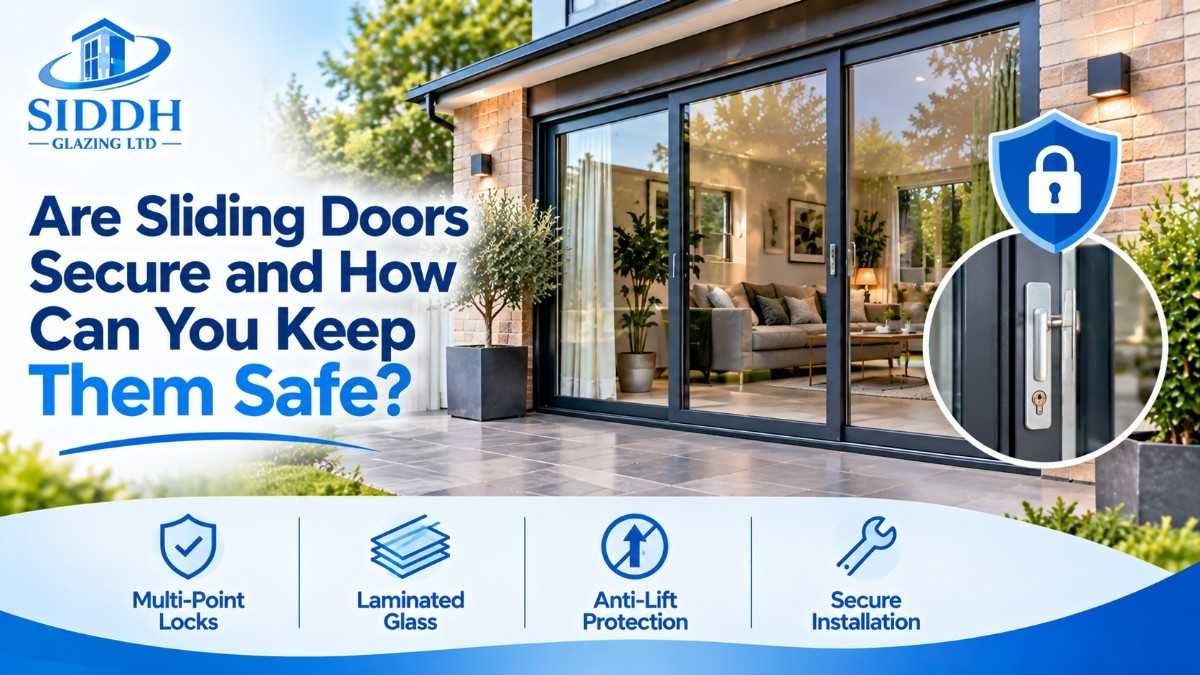
“Are sliding doors secure?” Well, that is a question that comes up again and again when you are weighing up a new patio door, and it deserves a straight answer. Sliding doors are not inherently unsafe, but the cheap single-latch versions that were fitted across the UK in the 1980s and 1990s gave the whole format a bad name. A well-specified sliding door with proper locking, reinforced tracks and the right glazing is a genuinely tough target. At Siddh Glazing Ltd., we fit sliding and patio doors across London and Essex, and the difference between a vulnerable door and a secure one almost always comes down to specification rather than the sliding mechanism itself.
Are sliding doors secure? The honest starting point
According to the FBI Uniform Crime Report for 2023, roughly 21% of residential break-ins begin through sliding doors. That figure is often quoted as proof that sliding doors are a weak point, but it is really a comment on how many older sliding doors are still in service with factory hardware that was never designed to resist force.
Sliding doors are popular with burglars for three practical reasons. They are usually at the back or side of a property, away from the street. They open quietly. And the large glass panel offers an obvious point of attack. None of that means the door cannot be secured. It means the hardware and glass need to be chosen with security in mind.
Why some sliding doors are easier to break into
Most of the vulnerability comes down to three factors, and all three can be designed out.
Weak locks. Factory latches are lightweight and often rely on friction rather than full mechanical engagement, so they can be forced with a screwdriver.
Lift-out risk. On older doors, once the panel is pried open slightly, it can sometimes be lifted off the track from outside.
Exposed glass. A large single pane is easy to strike, and ordinary glass offers little resistance.
Single-storey homes and back-garden entries are the most common targets, simply because an intruder is less likely to be seen. If your door is original to a 1990s extension, it is worth having the lock and track checked before you assume it is fine.
What a secure sliding door actually looks like
When you are buying new, the specification sheet tells you most of what you need to know. Look for a multi-point lock that engages the frame at several points rather than a single latch, and ask whether the door has anti-lift blocks or screws in the upper track. Heavy-duty metal rollers rather than plastic ones reduce wobble and make the panel harder to shift.
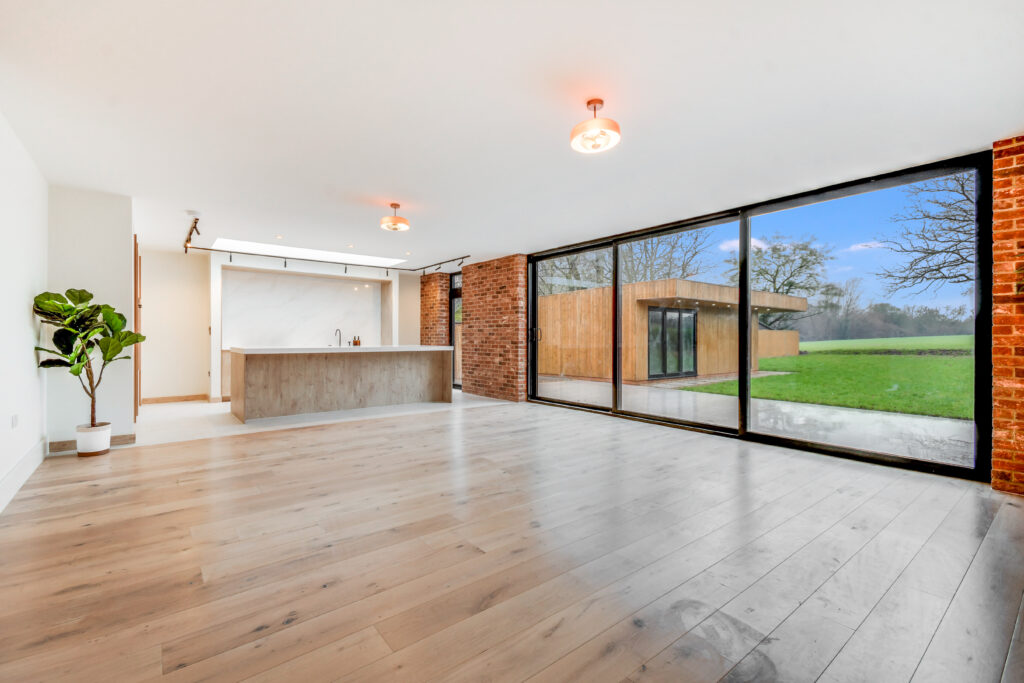
Our aluminium doors are built with slim, strong frames and are available as sliding patio doors, so you get the wide sightlines without compromising on the locking. If your opening suits a hinged door instead, a composite door with a solid timber core and a multi-point lock is one of the most secure entrances you can fit to a British home.
7 practical ways to keep sliding doors safe
Whether you are upgrading an existing door or specifying a new one, these are the steps that make a real difference.
Upgrade the lock. A multi-point system is the single biggest improvement. Look for hardware rated to ANSI/BHMA Grade 1 or 2, and avoid adhesive or surface-mounted locks in favour of integrated or drill-through hardware.
Fit anti-lift screws or stops. These go in the upper track and stop the panel from being lifted out of the frame.
Add a security bar. A steel or aluminium rod placed horizontally between the sliding panel and the frame holds the door shut even if the lock fails.
Reinforce the strike plate. Metal shims around the strike plate make the frame harder to split.
Choose laminated glass. Laminated glazing holds together when struck, so it does not open up a hole. Toughened glass is stronger than standard glass but breaks into small pieces, so laminated is the better security choice.
Replace plastic rollers with metal ones. This reduces wobble and improves weight distribution, making the panel harder to force.
Keep the track clean and the door adjusted. A door that runs smoothly and sits tight in its frame is harder to lever. Grit and a sagging panel are an intruder’s friend.
Small mechanical fixes like these can turn a five-second break-in into a two-minute struggle, which is usually long enough for an opportunistic burglar to give up and move on.
Don’t forget the rest of the house
It is easy to focus on the patio door and overlook the windows beside it. A ground-floor window is just as accessible, and a weak window lock undermines a strong door. Our uPVC Windows are British-made with advanced double or triple glazing and secure multi-point locking, so the whole rear elevation is protected rather than just the door.
If your sliding doors open onto a conservatory or garden room, the glazing in that structure matters too. Our uPVC Conservatories use impact-resistant, colour-fast frames and energy-efficient glazing, and a roof lantern installation can bring in daylight without adding another easy point of entry at ground level.
What the standards and insurers look for
Security hardware in the UK is tested against recognised standards, and your home insurer will often ask about them. Locks and cylinders are rated under the British Standard BSI framework, and the police-backed Secured by Design scheme sets out how doors and windows should be specified to resist attack. When you are comparing quotes, ask which standard the lock meets rather than accepting a general claim that the door is secure.
It also helps to think about visibility. Sliding doors at the back of a house are less overlooked than a front door, so lighting, planting and a clear line of sight from the house all add a layer of deterrence that costs very little.
Frequently overlooked: the door is only as good as the installation
A premium door fitted badly is a security risk. If the frame is not square, the panel does not sit tight, and the lock does not engage fully. That is why the fitting matters as much as the specification. Siddh Glazing has over 15 years of experience and a track record of award-winning installations, and every door is fitted to sit true in its opening so the locking hardware does its job properly.
If you are also rethinking the entrance to your home, a porch adds a sheltered, lockable layer in front of the front door, and a garage door with weather seals and quality hardware closes off another common weak point. For commercial properties with large glazed elevations, curtain walling is specified with high-performance frames and weather-resistant seals from the outset.
The bottom line on sliding door security
So, are sliding doors secure? Yes, when they are specified and fitted properly. The format is not the problem. A single friction latch, plastic rollers and ordinary glass are the problem, and every one of those can be upgraded. If your current door is more than fifteen years old, or you are planning a new extension, it is worth having the specification reviewed before you buy.
Ready to specify a sliding door that is genuinely secure? Visit our aluminium doors page or call Siddh Glazing Ltd. on 01702 969 997 to book a quotation across London and Essex.
Frequently asked questions
Are sliding doors secure enough for a ground-floor back door?
Yes, when they are properly specified. A modern sliding door with a multi-point lock, anti-lift blocks and laminated or toughened glazing is a far tougher target than an old single-latch patio door. The weak point is almost always the original hardware, not the sliding format itself.
Can a burglar lift a sliding door off its track?
Older doors can sometimes be lifted out of the track once the panel is pried open slightly. Anti-lift screws or stops fitted in the upper track, plus heavy-duty metal rollers, make that far harder and turn a quick break-in into a noisy struggle.
What is the most important upgrade for sliding door security?
The locking mechanism. Replacing a friction latch with a multi-point lock that engages the frame at several points is the single biggest improvement, ideally backed by anti-lift hardware and laminated glass.
Does laminated glass make a difference on a sliding door?
Yes. Laminated glass holds together when struck rather than shattering into an opening, so it slows an intruder down and keeps the weather out. Toughened glass is stronger than ordinary glass but breaks into small pieces, so laminated is the better security choice.
Should I add a security bar as well as a lock?
A steel or aluminium security bar placed horizontally between the sliding panel and the frame is a cheap, effective backup if the lock ever fails. It is not a substitute for a proper multi-point lock, but the two work well together.