
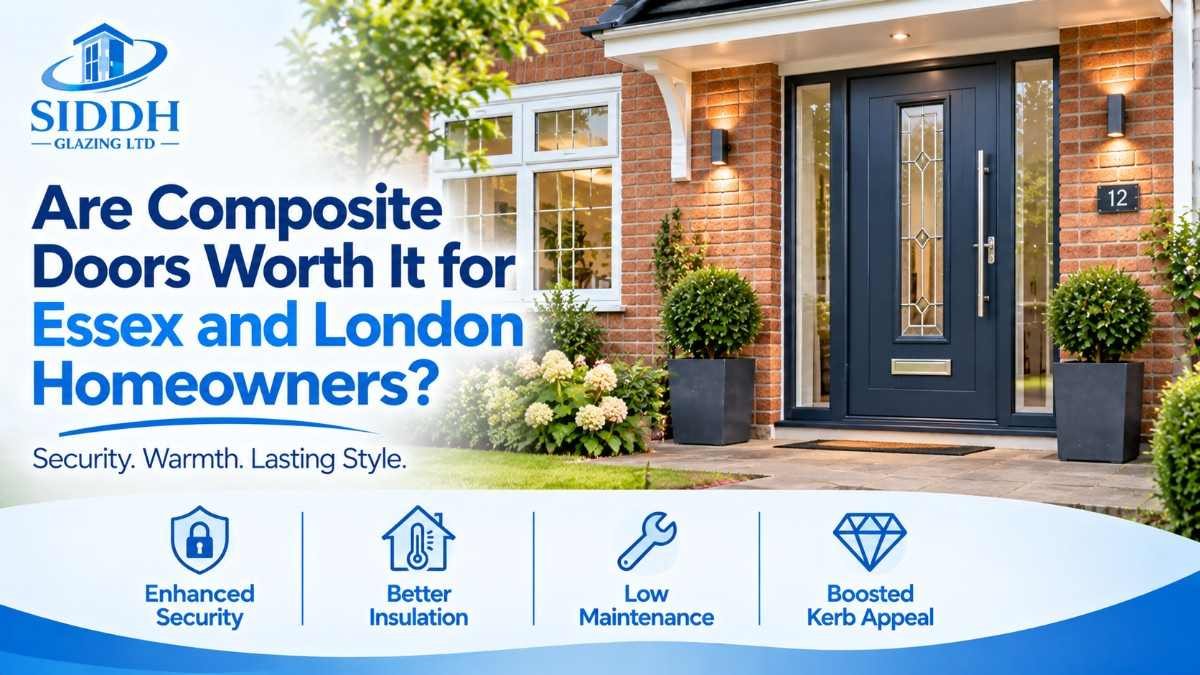
Thinking about a new front entrance? The question “are composite doors worth it” really comes down to three things: what you pay, what you get back in security and warmth, and how well the door is fitted. For homeowners across Essex and London, a composite door is often the single biggest visual and practical upgrade you can make to a house, but it isn’t the cheapest option on the shelf. This guide walks through the honest trade-offs so you can decide with your eyes open.
At Siddh Glazing Ltd we fit composite doors made in Britain with a solid timber core and a solid outer skin, and we have spent over 15 years installing entrances across the region. Here is what actually matters when you compare composite against uPVC and timber.
What Is a Composite Door, and Why Does the Build Matter?
A composite door is not one material but a sandwich. The core is usually solid timber or polyurethane foam, wrapped in a glass-reinforced plastic (GRP) skin, with uPVC layers and sometimes steel reinforcement inside. That construction is what makes it thicker and harder to breach than a hollow uPVC panel or a single-skin timber door.
Since the slab is solid, it also holds its shape. Timber can swell, shrink and warp when the British weather swings from damp autumn to freezing January, and a hollow uPVC door can feel flimsy under a shoulder. A composite slab resists both. The trade-off is weight: composite doors are heavier, which is good for security but means the frame and hinges have to be up to the job. That is an installation question as much as a product question.
Are Composite Doors Worth It on Security Alone?
For many homeowners, yes. Security is the most compelling reason to choose composite. The solid core, the thicker slab and the reinforced construction make the door significantly harder to force than single-material alternatives. Add a multi-point locking system and a high-security cylinder, and the entrance becomes a genuine barrier rather than a token one.
It is worth being clear that the door is only as good as its weakest point. A premium slab hung in a flimsy frame with a cheap cylinder is a false economy. When you buy, ask what locking hardware is included, how the frame is reinforced and whether the cylinder meets current security standards. The Department for Levelling Up, Housing and Communities publishes guidance on building regulations that covers doors and security in dwellings, which is a useful starting point if you want to understand the minimum standards a new entrance should meet.
The Insulation and Draught Question
Composite doors perform well thermally because the core insulates far better than a hollow panel. In a typical Essex or London home, the front door is a small surface area but a surprisingly leaky one, especially in older properties where the original door has settled and the letterbox whistles in a north wind. A solid core plus a well-sealed frame and double glazing cuts that draught dramatically.
If your hallway feels cold even when the heating is on, the door is often part of the problem. Pairing a composite entrance with energy-efficient glazing elsewhere, such as our uPVC Windows, gives you a more consistent result than changing the door alone. If you are still wondering, “are composite doors worth it? “, this pretty much explains.
Are Composite Doors Worth It Compared With uPVC and Timber?
This is where most buyers get stuck, so here is a plain comparison:
- uPVC doors: The cheapest option, easy to clean and decent for a back door, but the hollow panel can feel less substantial and the style range is narrower.
- Timber doors: Beautiful on a period property and repairable, but they need regular painting or treating and can warp in damp weather.
- Composite doors: The highest upfront cost of the three, but they combine the look of timber with the low maintenance of uPVC and the security of a solid core.
If budget is the only consideration, uPVC wins. If you plan to stay in the house for years and want an entrance that looks good, keeps heat in and does not need repainting every few summers, composite usually earns its price back in comfort and kerb appeal. For a broader look at how window and door materials compare across UK property styles, our guide to the uPVC window styles we fit is a useful companion read.
What About Kerb Appeal and Resale?
A front door is the first thing a buyer sees, and it is one of the cheapest ways to change a house’s character. Composite doors come in a wide range of colours, panel designs and glazing options, from heritage greens and deep blues on a Victorian terrace to sleek anthracite on a modern build. Since the finish is colour-fast and does not need repainting, it stays sharp.
Estate agents will tell you that a smart entrance sets expectations for the whole viewing. It will not add a fixed sum to your valuation, but it removes a reason for a buyer to haggle and makes the property photograph better online. In a competitive Essex or London market, that matters.
The Honest Downsides
No product is perfect, and it is worth naming the trade-offs:
- Higher upfront cost than a standard uPVC door.
- Heavier slab, so the frame and hinges must be specified correctly.
- Less repairable than timber if the skin is damaged; a deep gouge usually means a replacement panel rather than a sand and repaint.
- Quality varies widely between brands, so the cheapest quote is rarely the best value.
None of these are deal-breakers for most homeowners, but they explain why the answer to “are composite doors worth it” depends on the door you choose and who fits it.
Why Fitting Matters as Much as the Door
A composite door is only as good as its installation. A poorly hung door will drop, drag, leak and let in draughts no matter how good the slab is. Correct measuring, a properly reinforced frame, accurate hinge alignment and a clean seal are what turn a good product into a door that still closes sweetly in ten years.
This is where a specialist installer earns their keep. Siddh Glazing Ltd has over 15 years of experience and a track record of award-winning work across London and Essex, and we fit composite doors as part of a full entrance package that can include a matching porch. If your hallway is exposed, a porch adds a buffer against the weather and another layer of security before anyone reaches the door itself.
So, Are Composite Doors Worth It for Essex and London Homeowners?
For most people replacing a front door they intend to keep, yes. The combination of solid-core security, better insulation, low maintenance and strong kerb appeal makes a composite door a sound long-term buy, provided you choose a quality product and a fitter who knows what they are doing. If you are on a tight budget and the door is a stopgap, a uPVC door may be the pragmatic choice. If you want an entrance that looks the part and performs for decades, composite is the better investment.
If you are ready to see the difference for yourself, visit our composite doors page to browse styles, colours and glazing options, then call Siddh Glazing Ltd on 01702 969 997 for a fixed quote on your Essex or London home.
Frequently asked questions
How much does a composite door cost compared with uPVC?
Composite doors typically cost more than a standard uPVC door because of the solid core, glass reinforced plastic skin and heavier hardware. Prices vary with size, glazing and finish, so ask Siddh Glazing Ltd for a fixed quote for your entrance rather than comparing headline figures online.
Do composite doors really keep heat in better than timber?
Yes, in most cases. The solid timber or polyurethane foam core insulates far better than a hollow uPVC panel or a single-skin timber door, and the thicker slab reduces draughts around the frame. Pair it with good double glazing and a well-fitted frame for the best result.
Will a composite door warp or need repainting like wood?
No. The glass reinforced plastic outer skin does not need painting, staining or treating, and it resists warping and swelling in damp British weather. A wipe with a damp cloth is usually all the maintenance it needs.
Can I get a composite door that suits a period Essex or London home?
Yes. Composite doors come in traditional panel designs, cottage styles and heritage colours as well as sleek modern finishes, so they can sit comfortably on a Victorian terrace or a 1930s semi. Siddh Glazing Ltd offers a range of styles, colours and glazing options to match your property.
How long does a composite door last?
A well-made composite door fitted correctly should last decades, far longer than a cheap hollow door. Longevity depends on the quality of the core, the skin, the locking hardware and the installation, which is why fitting matters as much as the door itself.