
If condensation keeps clouding your windows every winter, you are not alone, and the good news is that double glazing prevents condensation more effectively than almost any other fix. Condensation is a common issue in many homes, and it tends to appear at the worst possible time, on cold mornings when you least want to be wiping down your glass. It is not just an aesthetic concern. Left unchecked, it can lead to mould growth, structural damage, and health problems.
High humidity and damp conditions can aggravate respiratory issues such as asthma, and mould growth can trigger allergic reactions in sensitive individuals. Over time, persistent moisture can also damage window frames, sills, and surrounding walls, leading to repairs that are far more costly than prevention. In other words, condensation is worth taking seriously, both for your home and for the people living in it.
So why does condensation happen in the first place, and how does double glazing prevent condensation from taking hold? Let us break it down.
The Science Behind Condensation
Condensation occurs when the air in your home reaches its dew point. This is the temperature at which the air becomes saturated with water vapour and can no longer hold any more moisture.
When that happens, the water vapour in the air turns into droplets of water, which settle on surfaces. The process is influenced by three main factors:
- Temperature: Cooler surfaces encourage condensation.
- Humidity: The more moisture in the air, the more likely it is to condense.
- Air movement: Poor ventilation allows moist air to linger.
Everyday activities add to the problem. Cooking, showering, drying clothes indoors, and even breathing release moisture into the air. In a well-sealed home, that moisture has nowhere to go, so it gathers and waits for a cold surface to settle on.
Here is a simple example. When warm, moist air meets a cool surface, the water vapour condenses and forms droplets. This is exactly why you often see condensation on windows and walls during the winter months, when indoor air is warm, but the glass is cold.
How Double Glazing Prevents Condensation
This is where the right windows make all the difference, and it is worth understanding exactly how double glazing prevents condensation before you invest.
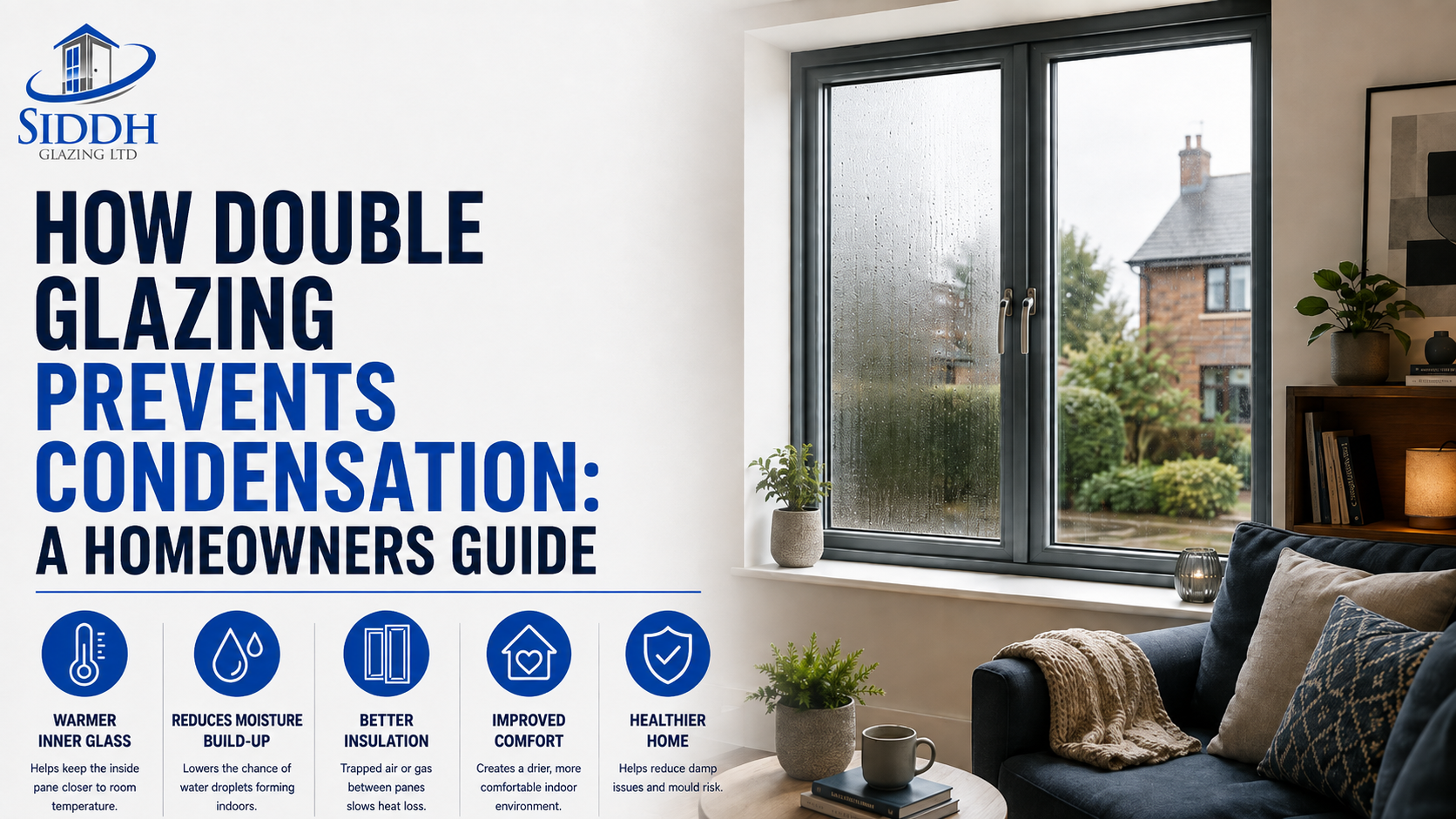
Double glazing consists of two panes of glass separated by a sealed gap, which is often filled with air or an inert gas such as argon. That gap is the key. It reduces the transfer of heat between the inside and outside of your home, so the inner pane stays much warmer than a single pane would.
Because the inner glass no longer gets as cold, warm indoor air is far less likely to reach its dew point when it touches the surface. The result is a warmer, drier window and noticeably less condensation forming on your glass. In short, double glazing prevents condensation by removing the cold surface it depends on.
A single-glazed window, by contrast, cools down quickly in winter and acts like a magnet for moisture. By installing double glazing, you reduce the cold surfaces that condensation needs to form, helping to keep your windows and walls clear.
The Benefits of Double Glazing
Preventing condensation is just the start. Double glazing offers a range of other benefits too:
- Reduced heat loss: It keeps warm air inside your home and cold air out.
- Improved energy efficiency: By holding heat in during winter, it can help lower your energy bills.
- Increased security: Two sealed panes make it more difficult for intruders to break in.
- Enhanced aesthetic appeal: It gives your home a sleek, modern finish.
- Reduced noise: The sealed gap dampens sound from outside for a quieter living space.
- Increased property value: A modern, energy-efficient home is more appealing to buyers.
Taken together, these benefits make double glazing a practical, long-term investment rather than a simple upgrade. You gain comfort, savings, and peace of mind in one solution.
Choosing the Right Double Glazing Solution
Not every window suits every home. When choosing a solution, it helps to weigh up a few factors before you commit:
- Energy efficiency and thermal performance
- Security features
- Aesthetic appeal and style options
- Budget
- Warranty and after-care
It is also worth thinking about the material of the frame, as this affects insulation, durability, and maintenance. uPVC frames, for example, are known for their thermal performance and low upkeep, which is part of the reason double glazing prevents condensation so reliably in modern homes. Getting the balance right ensures your windows perform well for years to come.
Conclusion
Double glazing is one of the most effective ways to prevent condensation in your home. By keeping the inner pane warmer, it tackles the very conditions that condensation needs to form, while also improving comfort, efficiency, and security.
If you are looking for a reliable and efficient way to prevent condensation in your home, consider installing uPVC windows from Siddh Glazing Ltd. Our uPVC windows are designed for high energy efficiency and come in a range of styles and configurations to suit your needs.
To learn more about how double glazing prevents condensation, or to explore our window range, contact us today to speak to one of our experts. You can also visit siddhglazing.co.uk to find out more about our products and services.
You may also like: Why Siddh Glazing is the Best Double Glazing Company in Romford?
Frequently asked questions
What is condensation, and why is it a problem in my home?
Condensation is the process by which water vapour in the air is converted into liquid water, often resulting in droplets of water forming on surfaces. This can be a problem in your home because it can lead to water damage, mould growth, and an uncomfortable living environment.
Why does double glazing help prevent condensation?
Double glazing works by creating a barrier between the inside and outside of your home, reducing the transfer of heat and moisture between the two. This helps to prevent condensation from forming on surfaces.
Can I still get condensation with double glazing?
Yes, it is still possible to get condensation with double glazing, but it is less likely to occur than with single glazing. This is because the gap between the two panes of glass in double glazing helps to reduce the transfer of heat and moisture.