
Choosing a composite door for your home is a decision that can shape your kerb appeal, security and monthly energy bills for years to come. With so many styles, colours and specification options available, it can be easy to feel overwhelmed. The good news is that setting clear priorities makes the choice much simpler.
This guide covers the essential factors to consider, helping you avoid common buying mistakes and choose a door that complements your property while meeting your practical needs. With extensive experience in composite doors, Siddh Glazing offers expert guidance to help homeowners make an informed choice.
What Actually Goes Into a Composite Door?
A composite door is not made from one single material. It combines several layers to give you the best of each. The core is usually a high-density foam or a solid timber block. Around that sits a weather-resistant skin, most often glass-reinforced plastic, known as GRP. This same composite principle is used in high-performance engineering, combining different materials to create a stronger, more durable finished product.
That combination is why composite doors feel so solid when you close them. They do not flex like a thin uPVC panel, they do not warp like an old wooden door, and they do not rust. The GRP skin also means the door can be moulded into realistic woodgrain textures or kept smooth and contemporary.
7 Essential Factors to Consider When Choosing Composite Door
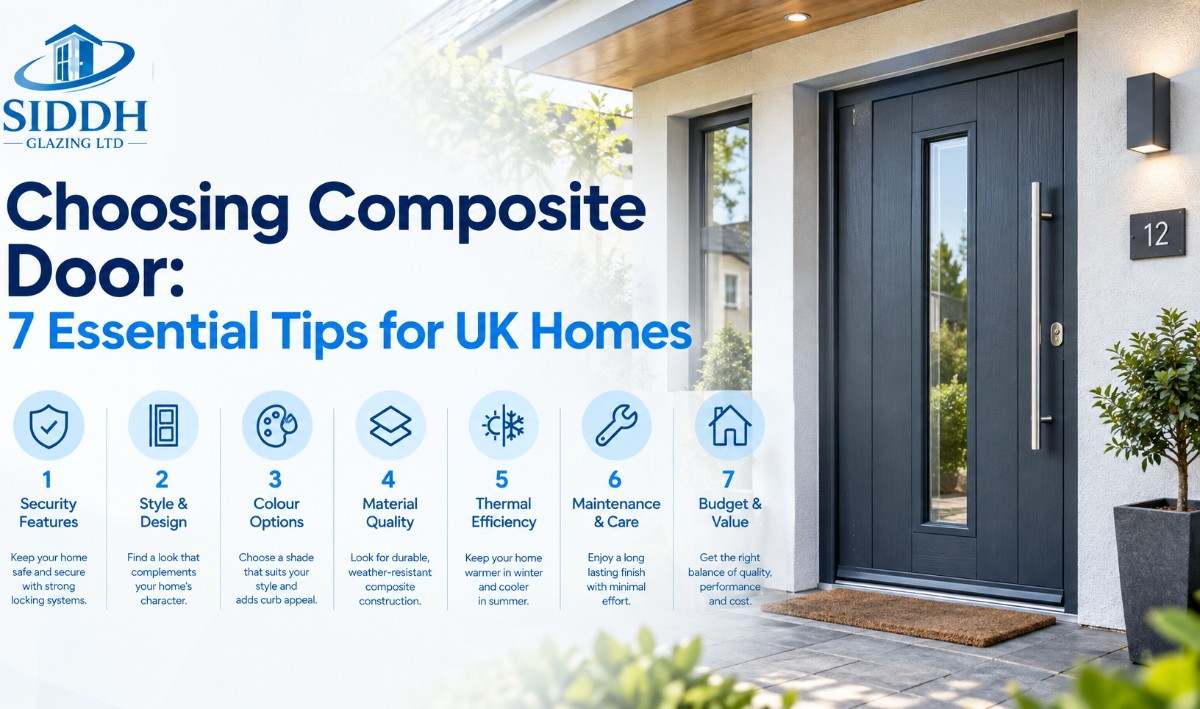
Before you choose a colour, think about performance. These seven points will help you compare options fairly, whether you are looking at a standard panel door or a more bespoke glazed design.
- Core construction. Ask what sits inside the door. A high density polyurethane foam core gives excellent thermal insulation and keeps the door lighter than a solid timber core, which helps the hinges over time. Both are good, but a quality core should be fully enclosed so moisture cannot reach it.
- GRP skin quality. The outer skin does the heavy lifting against weather and UV. Look for a thick, scratch resistant GRP finish. A cheap skin can look tired quickly, especially on south facing doors.
- Glazing options. Decide whether you want a glazed panel. A frosted or decorative glass insert lets natural light into your hallway while maintaining privacy. If you choose glass, ask about laminated glass, which holds together if broken and adds an extra security layer.
- Security hardware. A composite door is only as secure as its lock. Look for multi point locking, anti snap cylinders and hinges with security bolts. PAS24 accreditation is a useful benchmark, and many insurers expect it on a front entrance door.
- Energy performance. Check the U value. Lower is better. A good composite door will noticeably reduce draughts through your entrance, especially if the old door had gaps around the frame. Side panels should be double glazed or better.
- Style and colour. Flush doors suit modern homes, panelled doors suit period properties, and woodgrain finishes give a traditional feel without the upkeep. Dark colours such as anthracite grey or black look striking, but remember that very dark surfaces absorb more heat in direct sun, so choose a UV stable finish.
- Fitting and aftercare. Even the best door can fail if it is hung poorly. Professional measuring, a correctly sealed frame and a properly adjusted threshold are not optional extras, they are the difference between a door that performs for 30 years and one that leaks within two.
Siddh Glazing supplies and installs high quality composite doors with all of these factors considered from the first survey. We help you balance security, insulation and style for your specific property, rather than selling a one size fits all product.
Composite Door vs uPVC and Aluminium Options
If you are still weighing up materials, it helps to see where composite doors sit alongside the alternatives.
- uPVC. A budget friendly and low maintenance choice. uPVC is popular for windows and rear doors, but front entrance doors made from uPVC can feel lighter and less substantial than composite. We supply energy efficient uPVC windows that pair well with a composite front door.
- Aluminium. Slim sightlines and a modern, architectural look. Aluminium is strong and weather resistant, but it can transfer heat more readily unless it has a good thermal break, and it often costs more than composite for a similar entrance door. We install aluminium doors where the design calls for that slim profile.
- Composite. The strongest all round option for a front door. It combines high security, dense thermal performance, low maintenance and a wide range of realistic finishes. For most UK homes, a composite door gives the best balance of kerb appeal and everyday performance.
That does not mean uPVC or aluminium are bad. It simply means composite is often the best front door material when security and insulation are your top priorities, and when you want a door that feels premium every time you open it.
Getting the Fit and Surrounding Details Right
A new composite door does not work in isolation. The frame, threshold and any side panels all play a part in how the door performs. If you have an older property with an uneven opening, the surveyor should measure carefully and account for any slope or damp proof course. The same attention applies if the door is set within a porch, where airflow and drainage matter just as much as the door itself.
Siddh Glazing handles the full installation process, from surveying the opening to fitting the door, sealing the frame and clearing away. With over 15 years of experience and multiple awards, our team has installed composite doors in all kinds of UK homes, from Victorian terraces to new build detached properties.
Common Mistakes to Avoid When Choosing Composite Door
It is easy to focus on the door slab and forget everything around it. Here are a few mistakes we see regularly:
- Choosing a style without checking the opening size. Not every door is available in every size, so get measured first.
- Ignoring the side panel. If your entrance is wider than a standard door, a single door with a fixed side panel often looks better than an oversized slab.
- Choosing the cheapest quote without comparing silicone sealing, threshold adjustment and warranty cover.
- Forgetting to upgrade the hardware. A high security composite door deserves anti snap cylinders and hinge bolts, not a basic euro cylinder.
When you work with Siddh Glazing, we talk through these details before you commit, so the final door works as one complete entrance system.
Your Next Step: Choose a Composite Door with Confidence
Choosing composite door for your home becomes much easier when you work with a company that understands how the materials, frame and hardware work together. At Siddh Glazing, we offer a straightforward process: you tell us your style preferences and security needs, we survey your entrance, and we recommend a British made composite door that fits your home and your budget. Visit our composite door page to see the range, or contact us for a free quotation. Your front door is the first thing guests see, so make it a door you are proud to open.
Frequently asked questions
What is a composite door made of?
A composite door is made from a combination of materials, typically a solid timber or high density foam core, an insulating layer, and a glass reinforced plastic skin called GRP. This build improves strength, insulation and security compared with a single material door.
How long do composite doors last?
With proper fitting and basic cleaning, a high quality composite door can last 30 years or more. The GRP skin resists rot, warping and fading, which is why these doors often outperform older timber or uPVC alternatives.
Are composite doors better than uPVC doors?
Composite doors are usually more secure, thermally efficient and premium in feel than standard uPVC doors, and they offer a wider range of realistic finishes. uPVC remains a good budget option for rear doors or windows, but for a front entrance, composite is often the stronger all round choice.
Do composite doors fade in sunlight?
Quality GRP skins are UV resistant, but very dark colours in constant direct sun may show slight fading over many years. Lighter shades and reputable brands with UV stable finishes tend to handle prolonged sun exposure best.
Can I fit a composite door myself?
It is not advisable. Correct measurement, load bearing frame support, security hardware positioning, weather sealing and building regulations all make professional installation important. Poor fitting can compromise security and lead to draughts or leaks.