
When UK homeowners compare triple glazing vs double glazing for energy efficiency, they usually want one thing: a warmer home without higher energy bills. The right choice depends on your property, your budget, and what matters most to you, but both options deliver a huge step up from old single glazing.
That said, the two options are not interchangeable. The extra pane in triple glazing changes the way the window performs in British weather, how it feels to sit next to on a cold evening, and how it performs over time. In many homes, double glazing already meets or exceeds Building Regulations and delivers excellent comfort. In others, especially exposed north-facing rooms or houses with very large glass areas, triple glazing can be the difference between a chilly spot and a genuinely warm room. At Siddh Glazing Ltd, we fit both double and triple glazed windows, helping you choose the option that best suits how your home actually performs.
Triple Glazing vs Double Glazing: What Actually Changes?
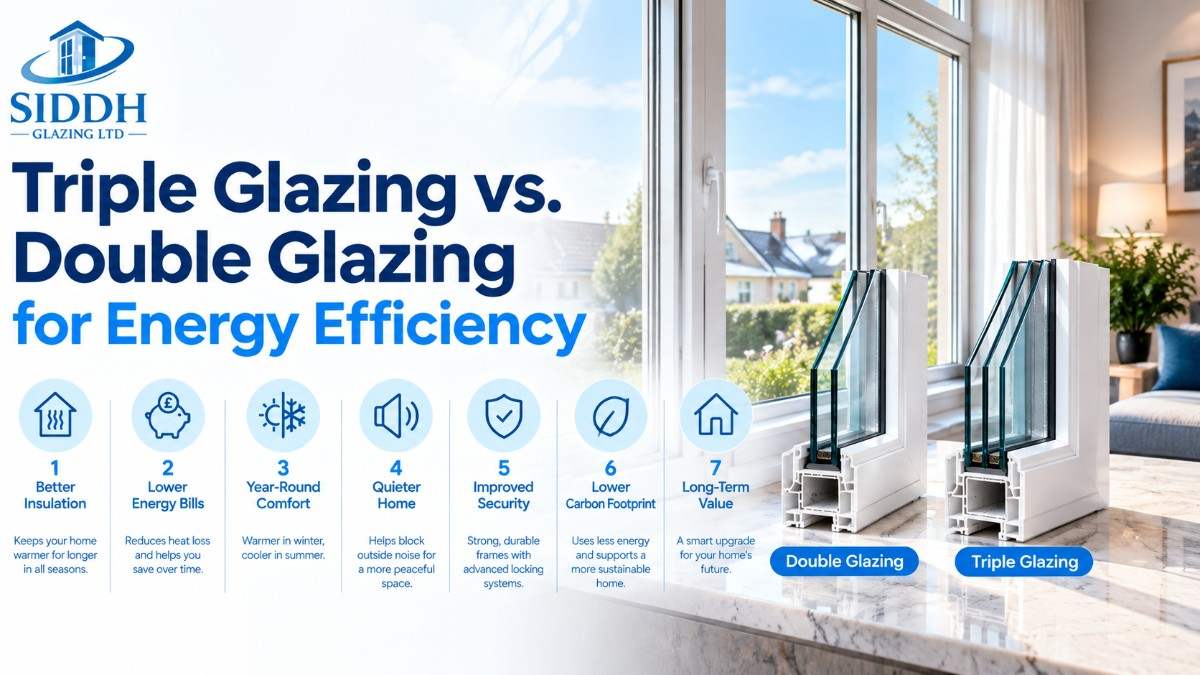
The core difference is simple. Double glazing uses two panes of glass with an insulating gap between them. Triple glazing uses three panes and two insulating gaps. Both units trap a layer of argon or krypton gas inside the sealed cavity to slow down heat transfer. Adding a third pane and a second gas-filled cavity reduces the amount of warmth that escapes through the glass, which is measured by the window’s U-value. A lower U-value means better insulation.
For context, a typical new double-glazed unit using low-emissivity (low-E) glass and argon fill usually achieves a centre pane U-value of around 1.2 to 1.4 W/m2K. A good triple-glazed unit typically achieves 0.8 to 1.0 W/m2K. That may not sound like much on paper, but it translates to roughly 20 to 30 percent less heat lost through the glass. Over the life of a window, that can add up to noticeable savings, especially in rooms that are heated for long hours.
Double Glazing: The Modern UK Baseline
Most UK homes built or refurbished since the early 2000s already have double glazing. A well-made double-glazed unit with a warm-edge spacer, low-E coating, and argon gas is a serious performer. It cuts heat loss through the window by about half compared to old single glazing, reduces draughts, and almost eliminates internal condensation on the glass in normal conditions. It is also lighter than triple glazing, which matters if you have older window frames, large sashes, or a property where the existing hinges and handles are not designed for the extra weight of a third pane.
When Is Double Glazing the Better Choice?
Homes in milder parts of the UK, such as the south coast or urban areas where winter temperatures rarely drop below freezing for long.
Homeowners who want to replace windows while still achieving a major improvement in comfort and energy performance.
Properties where the window openings are modest in size, so the additional insulation benefit of triple glazing would be modest too.
Sash windows or period properties where the visual slimness of the frame and the weight of the moving parts matter.
We can also fit double-glazed units with acoustic glass or laminated glass if noise from traffic or neighbours is a concern, without moving to the extra weight of triple glazing.
Triple Glazing: How the Extra Pane Improves Energy Efficiency
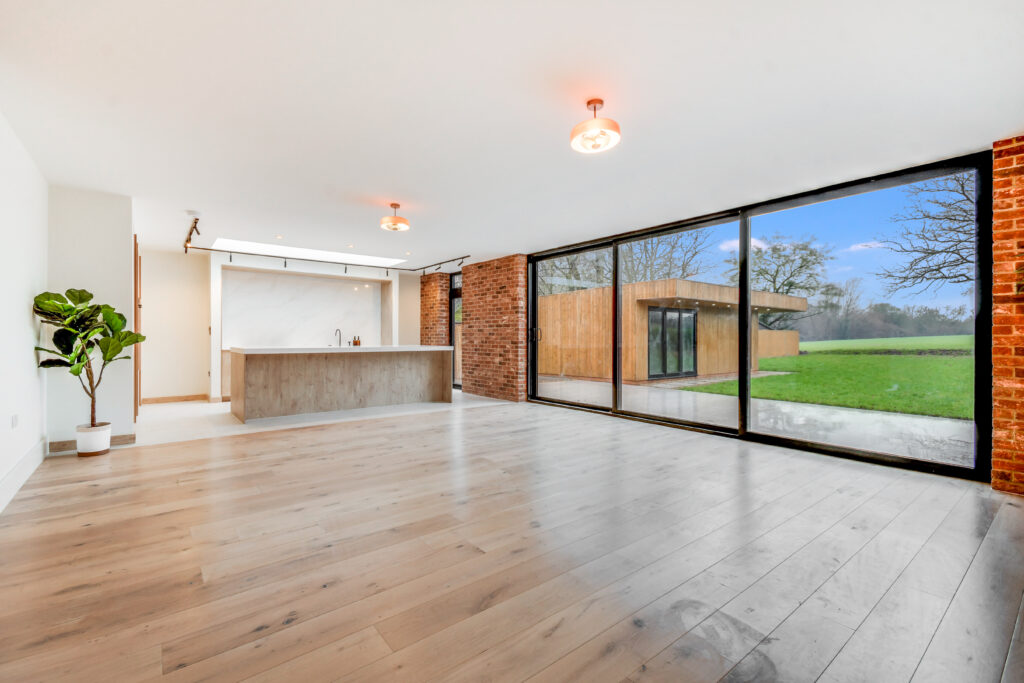
Triple glazing works harder in three specific situations. First, if your home is in a colder or more exposed location, such as rural Scotland, the Pennines, or coastal areas with strong winds, the lower U-value makes a noticeable difference. Second, if you have very large glazed areas, such as bifold doors, a conservatory with a solid roof, or floor-to-ceiling windows, the extra pane prevents those big glass surfaces from becoming cold radiators that chill the room. Third, if you are planning a deep retrofit, Passivhaus-style renovation, or a low-energy new build, triple glazing is often required to meet the design targets.
A triple-glazed unit is roughly 30 to 40 percent heavier than the equivalent double-glazed unit. That can require stronger hinges, reinforced frames, and sometimes additional structural support, especially on large opening windows.
How to Choose Between Double and Triple Glazing for your Home
Start with the room. Walk around your house on a cold evening and feel which walls and windows radiate cold. If a room with old single glazing is already unbearable, double glazing may be enough. If a room with decent double glazing still feels cold near the glass, triple glazing could help.
Check your existing frames. If your frames are in good condition and you only need replacement sealed units, keep in mind that your frames may not cope with triple glazing weight. We can advise on whether reinforcing or full replacement is needed.
Review your heating bills. If your energy costs are high, improving your windows can help reduce heat loss and make your home more comfortable. The potential savings will depend on your existing glazing, window area, heating system and how you use your home.
Consider noise. Triple glazing is not automatically much better at sound insulation than double glazing because the third pane can create an additional path for sound. For noise reduction, we often specify different glass thicknesses or acoustic interlayers, which can be applied to either double or triple glazing.
Think about resale. A well-fitted double-glazed window already meets building regulations and is expected in any modern UK home. Triple glazing can be a selling point for buyers looking for high energy performance, especially in rural or colder areas, but its benefits will depend on the property and its location.
Triple Glazing Vs. Double Glazing for Energy Savings
For a typical three-bedroom semi-detached house in England, replacing all single-glazed windows with A-rated double glazing can significantly reduce heat loss and improve energy efficiency. Upgrading from good double glazing to triple glazing can deliver further energy savings, because triple glazing provides an additional layer of insulation. The savings can be more noticeable in colder regions and in homes with larger areas of glass.
The key consideration is how much additional heat loss can be prevented by upgrading from double to triple glazing. While double glazing already provides a substantial improvement over single glazing, triple glazing can deliver further thermal performance benefits in colder, more exposed homes and properties with large areas of glass.
What We Recommend at Siddh Glazing Ltd
We always start with a survey of your actual property. That means measuring the existing windows, checking the condition of the frames and lintels, looking at the orientation of the rooms, and discussing how you use each space. We do not recommend triple glazing for every job because it is not always necessary. If you have old single glazing, your priority is usually to get any modern double or triple glazed unit fitted properly. If you already have decent double glazing and you are chasing a very high standard of comfort, triple glazing in the coldest rooms can be a worthwhile upgrade.
Either way, we supply A-rated units as standard, with warm-edge spacers, low-E glass, and argon fill. Our installers are trained to fit both double and triple-glazed units without compromising the operation of the window.
If you would like a straight answer for your home, we can visit, assess the property, and recommend the glazing option that best suits your property’s structure, orientation, existing windows and energy-efficiency requirements.
Frequently asked questions
1. Is triple glazing more energy efficient than double glazing?
Yes. Triple glazing has three panes and two insulating cavities, giving it a lower U-value than double glazing. This means less heat escapes through the glass, helping your home stay warmer and potentially reducing heating costs.
2. Is triple glazing worth the extra cost in the UK?
It depends on your home. Triple glazing can be worthwhile in colder, exposed properties, homes with large glazed areas, or deep retrofit projects. For many standard homes, good-quality double glazing already provides excellent energy efficiency at a lower upfront cost.
3. How much more expensive is triple glazing than double glazing?
Triple glazing typically costs around 15 to 25% more than equivalent double glazing, although the exact price depends on the window size, frame, glass specification and installation requirements.
4. Does triple glazing reduce heating bills more than double glazing?
Yes, but the difference is usually smaller when upgrading from good double glazing than when replacing old single glazing. The potential savings depend on factors such as your home’s size, glazing area, heating use and energy tariff.
5. Is triple glazing better for cold rooms?
It can be. Triple glazing reduces heat loss through large glass areas and keeps the internal glass surface warmer. This can make a noticeable difference in rooms that feel cold near windows, particularly in exposed or colder parts of the UK.
6. Is triple glazing better than double glazing for noise reduction?
Not necessarily. Triple glazing does not automatically provide significantly better acoustic insulation. For noise reduction, factors such as glass thickness, different pane thicknesses and acoustic laminated glass can be more important.
7. Can my existing window frames support triple glazing?
Not always. Triple-glazed units are heavier than equivalent double-glazed units, so existing frames, hinges and hardware may not be suitable. A professional survey can determine whether your current frames can accommodate triple glazing or whether full window replacement is more appropriate.