
If you live near a busy UK road, you’ll know that traffic noise is rarely just one sound. There’s the roar of tyres, the hum of engines, braking, deliveries, and the low rumble that lingers long after the traffic has passed.
Acoustic glazing is often the first solution homeowners ask about, but it is also one of the most misunderstood. This guide explains what acoustic glazing can actually do, where its limitations lie, and how to specify it properly so your home feels genuinely quieter and more comfortable.
What acoustic glazing really is?
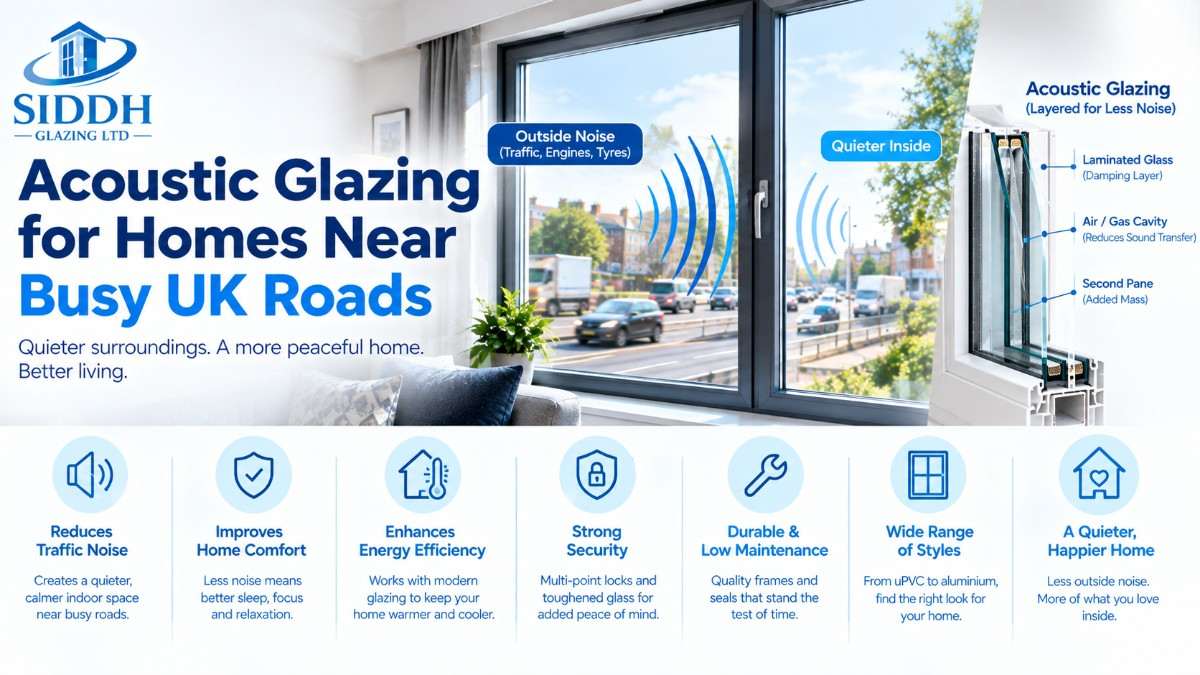
Acoustic glazing isn’t one special glass type with a fixed performance. It’s a construction engineered to cut airborne sound by controlling four things, which include pane mass, damping in laminated glass, pane thickness relationship, and the cavity between them. A high-performing unit might mix monolithic glass, acoustic laminated glass, asymmetric thicknesses, and a carefully chosen cavity. The right build-up depends on the noise source and the window system it’ll fit into.
The four levers work together:
- Mass: Thicker, heavier panes resist vibration and transmit less sound, but thicker isn’t always better at every frequency.
- Damping: A specialist acoustic interlayer changes how a pane vibrates, not just its weight.
- Asymmetry: Different pane thicknesses stop both panes behaving the same at matching frequencies.
- Cavity: The gap between panes is part of the acoustic system and shifts behaviour across frequencies.
One caveat matters more than any other. A glazing Rw value is a lab-declared or calculated rating for the construction. It’s not a promise your room will be quieter by that many decibels. The UK government’s technical housing standards guidance treats acoustic performance as a whole-building issue for exactly this reason.
Why the frame and seals matter as much as the glass
Glass is only part of the window. Sound will travel around a perfect pane through a poor frame, tired gasket, or unsealed reveal. That’s why two homes on the same street can fit similar glass and get very different results.
When comparing quotes, ask what happens at the edges. A well-specified window has continuous seals, a rigid frame that won’t flex, and drainage that doesn’t double as a sound path. If a supplier talks only about glass millimetres and never mentions frame or installation, that’s a warning sign.
This is where a whole-window approach pays off. Siddh Glazing Ltd supplies and installs uPVC windows with advanced double or triple glazing, multi-chambered profiles, and quality gaskets, giving you a frame that supports acoustic glass rather than undermining it. If you prefer slimmer sightlines, aluminium doors with thermal breaks and sealed double glazing are another route to a quieter, better-sealed opening.
How to specify acoustic glazing for a busy road
Start with the noise, not the product. A road with constant motorway-speed traffic has a different frequency profile than a residential street with stop-start congestion. Tell your supplier what you actually hear; is it a low rumble, a tyre hiss, or voices and engines? That answer shapes the specification.
- Identify the dominant noise. Low-frequency rumble needs mass and cavity depth; higher-frequency tyre hiss responds well to damping.
- Choose an asymmetric build-up. Different pane thicknesses avoid the coincidence dip where glass insulation drops.
- Use acoustic laminated glass where it counts. The interlayer adds damping as well as mass.
- Check the frame and seals. The best glass in a leaky frame is wasted money.
- Plan ventilation deliberately. Standard trickle vents are a direct sound path.
- Look at flanking paths. Lofts, shared walls, floor voids, and letterboxes all leak sound.
- Ask for the test evidence. Performance should relate to a clearly defined, tested configuration.
That last point isn’t bureaucracy. As the Optima acoustics guidance explains, lab results relate to the complete tested specimen, and on-site performance can be affected by installation quality, interfaces with adjoining construction, doors, penetrations, and sound travelling through surrounding elements.
Acoustic glazing versus standard double glazing
Standard double glazing is designed mainly for thermal performance. It reduces some noise by adding a second pane and a sealed cavity: which is why many homeowners notice an improvement after replacing old single glazing. But it’s not the same as acoustic glazing.
Acoustic units are specified around sound. That might mean acoustic laminated glass on one or both panes, asymmetric thicknesses, a wider cavity, or a combination. The TSPW noise reduction glazing guide, reviewed by Sebastian Paszek of the Institute of Acoustics, makes the point clearly: the best acoustic glazing isn’t selected by adding up glass millimetres, because mass, damping, asymmetry, and cavity interact.
If you’re already replacing windows for warmth, upgrading the glass build-up at the same time is usually far cheaper than doing the job twice. Siddh Glazing’s uPVC windows are available in casement, sash, tilt and turn, flush casement, and bay styles: so you can match the acoustic specification to your property’s look rather than compromising one for the other.
Doors, conservatories and the rest of the house
Windows are usually the biggest opening in a room, but they’re rarely the only one. A hollow front door, a poorly fitted conservatory roof, or a single-glazed porch can undo a lot of good work.
For entrances, a solid core makes a measurable difference. Siddh Glazing’s composite doors use a solid timber core with a solid outer layer, helping with both insulation and noise compared to a thin panel door. If your hallway is the noisiest room in the house, that’s often the reason.
Conservatories and glazed extensions need the same thinking. A uPVC conservatory with energy-efficient glazing creates a quieter, warmer living space than an older glass box, and upgrading an existing conservatory roof is often the single most effective change you can make. Where a flat roof extension is planned, a roof lantern with sealed double glazing and thermal breaks brings in daylight without turning the room into a drum.
What acoustic glazing will not fix
Honesty saves money here. Acoustic glazing won’t silence a room if noise arrives through a shared wall, uninsulated loft, open chimney, or ventilation path. It won’t remove low-frequency rumble that travels through the building structure. And it won’t deliver the exact decibel reduction printed on a lab certificate: because that figure describes the glass, not your room.
What it does do, when specified and installed properly, is remove the largest single airborne path for traffic noise. For most homes near a busy road, that’s the change that makes the difference between a front room you avoid and one you use.
Getting the specification right
Acoustic glazing rewards planning. Decide which rooms matter most, describe the noise you hear, and ask for a specification that explains mass, damping, asymmetry, and cavity: not just the number of panes. Check the frame, seals, ventilation, and installation detail. Then get a quote that covers the whole opening, not just the glass.
If you’re ready to make your home near a busy road noticeably calmer, start with a survey and quotation from Siddh Glazing Ltd. The team can walk you through options for uPVC windows, composite doors, and conservatory glazing, and specify a build-up suited to the noise you actually live with.
Frequently asked questions
Does acoustic glazing really make a room quieter?
Yes, but not by a fixed number of decibels. A glazing Rw value is a laboratory rating for the glass build-up, not a promise that your room will drop by the same figure. Real-world results depend on the frame, seals, installation quality and how much sound arrives through walls, vents and floors.
Is acoustic glazing the same as double glazing?
No. Standard double glazing is designed mainly for thermal insulation, while acoustic glazing is engineered around mass, damping, pane asymmetry and cavity depth. A well-built acoustic unit may use acoustic laminated glass, asymmetric pane thicknesses or a wider cavity to target traffic noise frequencies.
How much does acoustic glazing cost in the UK?
Costs vary with window size, frame material, glass build-up and the number of openings, so there is no single figure. As a rule, acoustic laminated glass and wider cavities cost more than standard double glazing, and whole-house projects are usually quoted per opening.
Will acoustic glazing help with low-frequency traffic rumble?
Low frequencies are the hardest to control because they carry more energy and travel through structure as well as air. Asymmetric pane thicknesses and deeper cavities help, but you should also look at seals, trickle vents and flanking paths such as lofts and shared walls.
Can I keep ventilation without losing the noise reduction?
Yes, if you plan it properly. Standard trickle vents create a direct path for sound, so acoustic-rated vents or a different ventilation strategy are usually needed. This is one of the details worth agreeing before installation, not after.