
If you are considering new windows for your home, uPVC windows are likely at the top of your list. They are the most popular choice in the UK for good reason; they offer excellent energy efficiency, low maintenance, and strong security at a competitive price. In this uPVC windows guide, we will cover everything you need to know about uPVC windows, from benefits and costs to installation and maintenance. Whether you are building a new home or replacing old windows, this guide will help you make an informed decision.
What Are uPVC Windows?
uPVC stands for unplasticised polyvinyl chloride. Unlike standard PVC, uPVC is rigid, durable, and resistant to weathering. Our uPVC windows are made from extruded profiles that are welded together to form strong frames. They are typically reinforced with steel or aluminium for added strength.
These windows can be fitted with double or triple glazing and are available in a wide range of styles, including casement, sliding sash, tilt and turn, and bay windows. We supply British-made uPVC windows designed to meet the highest standards of thermal performance and security.
Key Benefits of uPVC Windows
Energy Efficiency
One of the biggest advantages of uPVC windows is their excellent thermal insulation. The multi-chambered profiles trap air, reducing heat transfer. Combined with double or triple glazing and low-emissivity glass, uPVC windows can significantly lower heating bills.
According to the Energy Saving Trust, replacing single glazing with A-rated double glazing can save a typical home around £195 per year on energy costs. As highlighted throughout this uPVC windows guide, improved insulation can dramatically reduce heat loss and improve comfort all year round.
To put this into perspective, a semi-detached house with single glazing may lose up to 20% of its heat through its windows. Upgrading to modern uPVC double glazing can reduce that heat loss substantially, helping your boiler work more efficiently and lowering your energy bills.
Additionally, uPVC frames have low thermal conductivity, meaning they do not transfer cold from outside to inside as readily as standard metal frames. Many modern profiles also include additional insulation within their chambers to further improve performance.
Low Maintenance
uPVC does not rot, warp, crack, or corrode like traditional timber. It also does not require painting, staining, or regular treatments. A simple wipe with warm soapy water is usually enough to keep the frames looking clean and fresh.
For homeowners looking for a practical solution, this low-maintenance quality is a major advantage. Even in coastal areas where salt spray can affect other materials, uPVC remains highly durable.
Security
Modern uPVC windows are designed with security in mind. We fit our windows with multi-point locking systems, reinforced frames, and high-security hardware to help protect your home.
Many options also include laminated glass, internal glazing beads, and advanced locking mechanisms that make forced entry significantly more difficult. These features not only provide peace of mind but may also help reduce home insurance premiums.
Sound Insulation
uPVC windows fitted with double or triple glazing can significantly reduce outside noise. This makes them ideal for homes located near busy roads, airports, schools, or other noisy environments.
Double glazing with wider gaps between panes can reduce noise levels dramatically, while acoustic laminated glass can provide even greater sound reduction. Combined with the airtight seals of uPVC frames, these windows help create a quieter and more comfortable living space.
Cost Effectiveness
Compared with timber and aluminium alternatives, uPVC windows are generally more affordable while delivering excellent performance. Their long lifespan and minimal maintenance requirements make them a cost-effective investment.
The initial cost of uPVC windows is often considerably lower than timber and aluminium options. When energy savings and maintenance costs are taken into account, many homeowners find they offer the best overall value.
Types of uPVC Windows
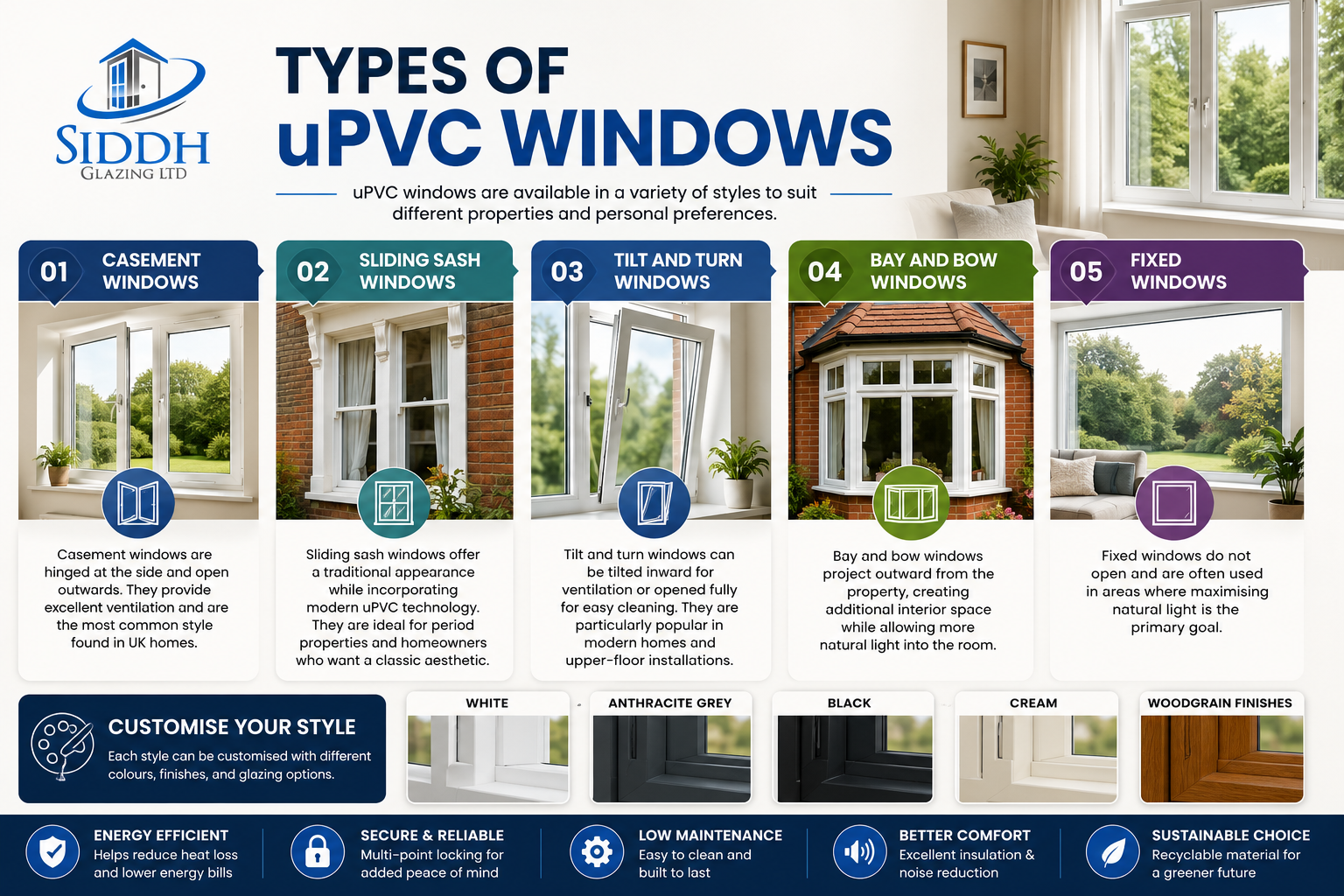
uPVC windows are available in a variety of styles to suit different properties and personal preferences.
Casement Windows
Casement windows are hinged at the side and open outwards. They provide excellent ventilation and are the most common style found in UK homes.
Sliding Sash Windows
Sliding sash windows offer a traditional appearance while incorporating modern uPVC technology. They are ideal for period properties and homeowners who want a classic aesthetic.
Tilt and Turn Windows
Tilt and turn windows can be tilted inward for ventilation or opened fully for easy cleaning. They are particularly popular in modern homes and upper-floor installations.
Bay and Bow Windows
Bay and bow windows project outward from the property, creating additional interior space while allowing more natural light into the room.
Fixed Windows
Fixed windows do not open and are often used in areas where maximising natural light is the primary goal.
Each style can be customised with different colours, finishes, and glazing options. We offer a wide range of choices, including white, anthracite grey, black, cream, and realistic woodgrain finishes.
Cost of uPVC Windows
The cost of uPVC windows varies depending on several factors, including size, style, glazing specification, and installation requirements.
Typical installed costs include:
- · Standard casement window (600mm x 900mm): £250–£400
- · Sliding sash window: £500–£800
- · Large three-panel bay window: £1,200–£2,500
Additional factors affecting cost include:
- · Triple glazing upgrades
- · Decorative glazing options
- · Coloured frames
- · Structural alterations
- · Regional labour costs
We provide free, no-obligation quotations tailored to each property, ensuring transparent pricing with no hidden costs.
Energy Ratings and Glazing Options
uPVC windows are rated from A++ to G for energy efficiency. The BFRC (British Fenestration Rating Council) label helps homeowners compare performance levels.
Double Glazing
Double glazing consists of two panes of glass separated by an insulating gap filled with argon gas. It remains the standard choice for most UK homes.
Triple Glazing
Triple glazing incorporates three panes of glass and provides even greater insulation and noise reduction. It is particularly beneficial in colder regions or particularly noisy locations.
Low-E Glass
Low-emissivity glass features a microscopic coating that reflects heat back into the room, helping improve energy efficiency.
Laminated Glass
Laminated glass provides additional security and sound insulation while also helping protect furnishings from UV damage.
We offer a range of glazing options to suit different budgets and performance requirements.
Installation Process
Professional installation plays a vital role in ensuring your windows perform correctly and last for decades.
Our installation process typically includes:
Survey and Measurement
We visit your property to take precise measurements and assess any specific requirements.
Manufacturing
Each window is manufactured to order, typically within two to four weeks.
Removal of Existing Windows
Our installers carefully remove existing frames while minimising disruption and protecting surrounding areas.
Installation
The new windows are fitted, levelled, secured, and insulated using specialist materials to ensure a weatherproof finish.
Finishing and Testing
Internal and external trims are applied, and each window is tested to ensure smooth operation and optimal performance.
With over 15 years of experience, we pride ourselves on delivering a professional installation process with minimal disruption.
Maintenance Tips
Although uPVC windows require very little maintenance, a few simple steps can help maximise their lifespan.
- · Clean frames and glass with mild detergent and water twice a year.
- · Lubricate hinges and locking mechanisms annually.
- · Inspect seals periodically and replace them if necessary.
- · Keep drainage holes clear to prevent water build-up.
Avoid abrasive cleaning products that may scratch the surface. A soft cloth and warm soapy water are usually all that is needed.
uPVC vs Other Materials
uPVC vs Timber
uPVC is generally more affordable and requires significantly less maintenance than timber. While timber offers a traditional appearance, it requires regular painting and treatment to prevent deterioration.
uPVC vs Aluminium
Aluminium windows offer slim sightlines and exceptional strength, but they are typically more expensive. Without thermal breaks, aluminium also provides lower insulation performance than uPVC.
For most homeowners, uPVC provides the best balance of cost, efficiency, durability, and ease of maintenance.
Environmental Impact and Recycling
Although uPVC is a plastic-based material, modern uPVC products are highly recyclable. Many manufacturers now incorporate recycled materials into new profiles, reducing waste and environmental impact.
The excellent thermal performance of uPVC windows also helps reduce household energy consumption and carbon emissions. With a lifespan of 25 to 35 years, they provide a long-term, sustainable solution for modern homes.
Why Choose Us for Your uPVC Windows?
At Siddh Glazing Ltd, we have more than 15 years of experience supplying and installing high-quality British-made uPVC windows. We are committed to providing products that are energy efficient, secure, and built to last.
From the initial consultation through to installation, we manage every stage of the process to ensure a smooth and hassle-free experience. We also offer comprehensive warranties and outstanding aftercare support.
In addition to uPVC windows, we provide a wide range of glazing solutions, including composite doors, aluminium doors, conservatories, roof lanterns, porches, curtain walling systems, and garage doors.
Our team is fully trained, insured, and dedicated to delivering excellent workmanship and customer service.
Wrapping it up
Choosing uPVC windows is one of the most practical and cost-effective ways to improve your home’s comfort, security, and energy efficiency. Their durability, low maintenance requirements, and excellent thermal performance make them a smart long-term investment for homeowners across the UK. Hopefully, this uPVC windows guide has helped you better understand the benefits, costs, installation process, and available options. If you are considering upgrading your windows, we are here to provide expert advice, quality products, and a professional installation service you can trust.
Frequently Asked Questions
What are uPVC windows?
uPVC windows are made from unplasticized polyvinyl chloride, a durable, low-maintenance material that offers excellent thermal insulation and security. They are a popular choice for UK homes due to their energy efficiency and long lifespan.
How long do uPVC windows last?
With proper installation and minimal maintenance, uPVC windows can last 20 to 35 years. Factors like exposure to harsh weather and regular cleaning can extend their lifespan.
Are uPVC windows energy efficient?
Yes, modern uPVC windows are highly energy efficient. They feature multi-chambered frames, double or triple glazing, and low-E glass coatings that reduce heat loss and lower energy bills.
Can uPVC windows be painted?
Yes, uPVC windows can be painted with specialist paints designed for plastic surfaces. However, it’s often better to choose a colour finish at the time of purchase, as factory-finished colours are more durable.
How much do uPVC windows cost?
The cost varies depending on size, style, glazing options, and installation complexity. On average, a standard uPVC window costs between £250 and £600 installed. For an accurate quote, it’s best to contact a professional installer like Siddh Glazing.