
Choosing the right window material is one of the most important decisions when improving your home. The windows you install today will affect your property’s energy efficiency, security, appearance, and maintenance requirements for many years to come. While PVC and uPVC may sound similar, they are designed for very different purposes and deliver vastly different results in residential applications. When comparing uPVC vs PVC windows, understanding the key differences can help you make a more informed decision and invest in a solution that offers lasting value, comfort, and performance.
What the ‘u’ Really Means in Window Materials
If you have come across the term “unplasticised” during your research, you may be wondering why it matters. At Siddh Glazing, we have seen firsthand how this small chemical difference can determine whether a window frame lasts for decades or begins to deteriorate within a few years.
Standard PVC, or polyvinyl chloride, contains softening chemicals known as plasticisers. These additives make the material flexible, which is useful for products such as pipes, cable insulation, and certain household items. However, flexibility is not ideal for window frames that must withstand constant exposure to sunlight, wind, rain, and changing temperatures.
uPVC, short for unplasticised polyvinyl chloride, is manufactured without these plasticisers. The result is a rigid, highly durable material that retains its strength and shape over time. This is why uPVC has become the preferred choice for modern double and triple-glazed windows throughout the UK.
Think of it as the difference between a flexible rubber hose and a sturdy ruler. One bends easily, while the other remains stable under pressure. For windows expected to perform reliably for decades, rigidity is essential.
Understanding the Difference Between PVC and uPVC
Although both materials originate from the same base polymer, their performance differs significantly when used in window systems.
PVC’s flexibility makes it suitable for products that need to bend or adapt to movement. However, prolonged exposure to ultraviolet rays and fluctuating weather conditions can cause the material to weaken over time.
uPVC, on the other hand, is specifically engineered for structural applications. Its rigid composition allows manufacturers to create strong, multi-chambered profiles that improve thermal performance, enhance security, and maintain their appearance for many years.
These characteristics have made uPVC one of the most widely used window frame materials in the UK residential sector.
You May Also Like:- Do uPVC Windows Sell Better? 5 Insights
The 5 Key Differences That Separate uPVC from PVC Windows
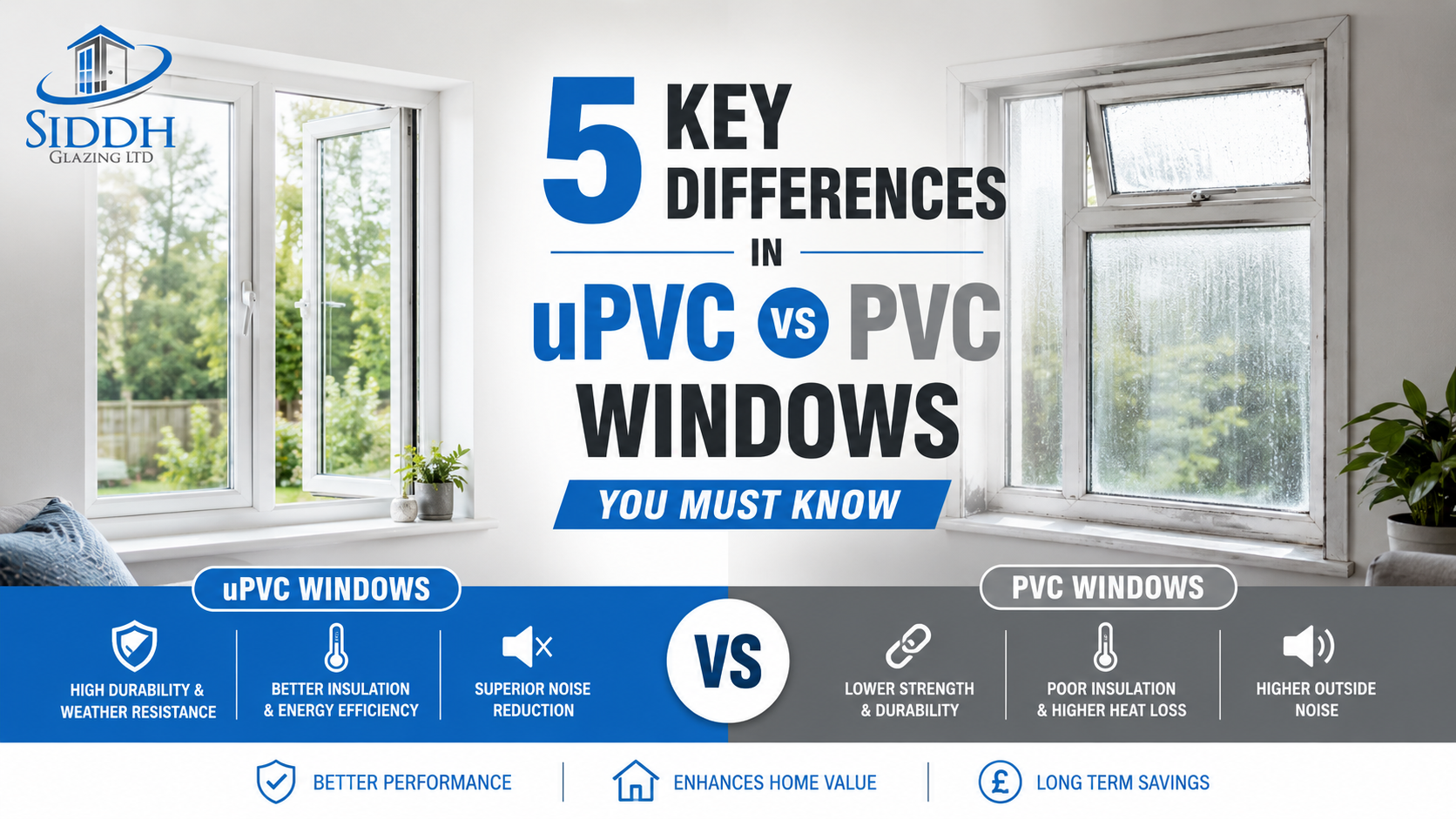
When comparing uPVC vs PVC windows, five important differences stand out. Each one has a direct impact on your home’s comfort, efficiency, security, and long-term maintenance costs.
1. Durability and Lifespan
Durability is one of the most significant distinctions between the two materials.
PVC frames can become brittle and discoloured after prolonged exposure to direct sunlight. As the plasticisers gradually migrate out of the material, cracks and structural weaknesses may begin to appear.
uPVC frames are designed to resist these issues. Without plasticisers, the material remains stable and retains its strength even after years of exposure to harsh weather conditions. High-quality uPVC windows can last between 20 and 35 years or more with minimal deterioration.
For homeowners seeking a long-term investment, uPVC offers considerably greater reliability.
2. Thermal Insulation and Energy Efficiency
Energy efficiency plays a crucial role in reducing household heating costs and improving year-round comfort.
uPVC is naturally a poor conductor of heat, making it an excellent insulating material. Modern uPVC frames feature multi-chambered profiles that trap pockets of air within the frame, creating an additional barrier against heat loss.
This advanced design helps maintain indoor temperatures and improves overall thermal performance. Combined with double or triple glazing, uPVC windows can significantly reduce energy consumption.
PVC’s softer composition limits its ability to support the same sophisticated chamber structures, resulting in lower insulation performance and reduced energy efficiency.
3. Maintenance Requirements
Homeowners increasingly prioritise low-maintenance home improvements, and window frames are no exception.
PVC frames often require additional treatments or protective coatings to slow the effects of weathering and UV exposure. Over time, they may become discoloured or require refurbishment.
uPVC windows require very little upkeep. In most cases, a simple wipe with a damp cloth is enough to keep the frames looking clean and attractive.
There is no need for painting, staining, sanding, or specialised maintenance, making uPVC a convenient and cost-effective option for busy households.
4. Security and Structural Strength
Window security depends heavily on the strength and rigidity of the frame.
uPVC is structurally robust, which is why it can be reinforced internally with galvanised steel. This reinforcement provides exceptional strength and creates a secure foundation for advanced locking systems, including shootbolt locks and high-security hinges.
PVC’s flexibility limits its ability to support similar reinforcement effectively, reducing its suitability for modern security applications.
For homeowners prioritising safety and peace of mind, uPVC provides a much stronger and more secure solution.
5. Environmental Sustainability
Sustainability is becoming increasingly important when choosing building materials.
Both PVC and uPVC can be recycled, but uPVC offers a significant environmental advantage through its longevity. uPVC windows last much longer, that is the reason fewer replacement cycles are required over the lifetime of a property.
This reduces manufacturing demand, transportation emissions, and landfill waste. At the end of their service life, uPVC frames can be recycled and processed into new window profiles, helping support a more circular economy.
For environmentally conscious homeowners, the extended lifespan of uPVC contributes to a lower overall environmental impact.
You May Also Like:- Best uPVC Windows Guide: Benefits, Costs, Styles
Why uPVC Windows Are the Preferred Choice for UK Homes
Few home improvements offer the combination of benefits that quality uPVC windows provide.
Modern uPVC frames help improve energy efficiency, enhance security, reduce maintenance requirements, and increase kerb appeal. Many homeowners also notice lower heating bills after upgrading older windows to modern uPVC systems.
In addition to practical advantages, uPVC windows complement a wide variety of architectural styles. Whether installed in a Victorian terrace, a traditional cottage, or a contemporary new-build property, they provide a clean and attractive appearance that enhances the overall character of the home.
The material’s durability also makes it particularly well-suited to the UK’s varied weather conditions, ensuring reliable performance throughout the seasons.
How Siddh Glazing’s uPVC Windows Deliver Superior Performance
Not all uPVC windows are created equal. At Siddh Glazing, we use premium-quality profiles and advanced glazing technologies to maximise performance in every installation.
Our uPVC window systems offer:
· Outstanding thermal efficiency with U-values as low as 0.8 W/m²K.
· Enhanced acoustic insulation that can reduce external noise by up to 38 decibels.
· Customisable designs including casement, tilt-and-turn, flush sash, and sliding sash styles.
· Extensive colour options featuring any RAL colour and realistic woodgrain finishes.
· Professional installation carried out by our experienced in-house fitting teams.
Every installation is carefully measured, fitted, sealed, and finished to ensure optimal performance and long-term reliability.
With more than 15 years of industry experience and hundreds of satisfied customers, Siddh Glazing has built a reputation for quality, craftsmanship, and exceptional customer service.
Complete Your Home Improvement Project
Upgrading your windows is often just the first step towards creating a more comfortable and energy-efficient home.
Many homeowners choose to complement their new windows with matching composite doors, roof lanterns, or conservatories. By selecting products designed to work together, you can create a consistent appearance while improving thermal efficiency throughout your property.
Our team can help you design a complete glazing solution tailored to your home’s style, layout, and performance requirements.
Wrapping it up!
The difference between PVC and uPVC extends far beyond a single letter. It affects how your windows perform, how long they last, and how much value they add to your home. When considering uPVC vs PVC windows, the evidence clearly favours the stronger, more durable, and more energy-efficient option. With superior insulation, enhanced security, minimal maintenance requirements, and a lifespan that can exceed three decades, uPVC remains the smart choice for modern homeowners.
Frequently asked questions
What does uPVC stand for?
uPVC stands for unplasticized polyvinyl chloride. It is a rigid, durable form of PVC that contains no added plasticizers, making it stronger and more suitable for window frames.
Is uPVC better than regular PVC for windows?
Yes, uPVC is far better for windows because of its superior rigidity, thermal insulation, and resistance to weather, warping, and fading. Standard PVC is too flexible and prone to rapid degradation outdoors.
Are uPVC windows more expensive than PVC?
Initially, uPVC windows may cost slightly more than basic PVC alternatives, but they offer far better long-term value due to lower maintenance, energy savings, and lifespan of 30+ years.
Can uPVC windows improve home security?
Absolutely. uPVC window profiles can be reinforced with galvanised steel and fitted with multi-point locking systems, offering a level of security that ordinary PVC frames cannot match.
How long do uPVC windows typically last?
High-quality uPVC windows from a reputable installer can last between 20 and 35 years with minimal maintenance, depending on exposure and care.
How long do uPVC windows last compared to PVC windows?
uPVC windows can last 20: 35 years or more with minimal deterioration, as they resist brittleness and discolouration. PVC frames degrade faster because plasticisers migrate out, causing cracks and weakness over time.
Are uPVC windows more energy-efficient than PVC windows?
Yes, uPVC’s rigid structure allows for multi-chambered profiles that enhance thermal performance. This helps reduce heat loss, making uPVC windows far more energy-efficient for homes than standard PVC frames.
Do uPVC windows offer better security than PVC windows?
uPVC’s inherent rigidity enables reinforced, multi-chambered frames that can accommodate robust locking mechanisms. This provides a higher level of security and break-in resistance compared to flexible PVC frames.
Are uPVC windows lower maintenance than PVC windows?
uPVC windows require minimal upkeep, as they resist warping, fading, and weathering. PVC frames often need more frequent repairs or replacement due to cracking and discolouration from UV exposure.